

V · HAND & NAIL
"Your nail polish and a 1920s Chevrolet are wearing the same paint."
In 1923, DuPont built a fast-drying nitrocellulose car lacquer to solve an assembly-line problem. In 1930, a chemist realized the same lacquer would work just as well on a fingernail — and founded Revlon on it two years later.
What's Inside
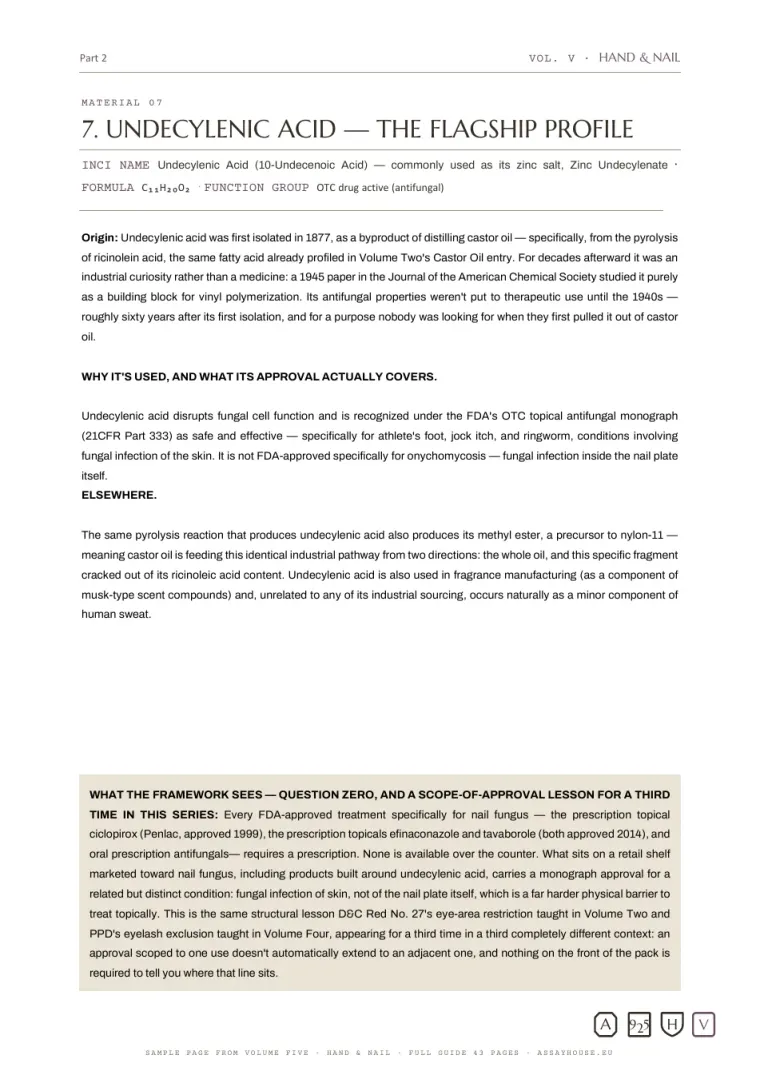
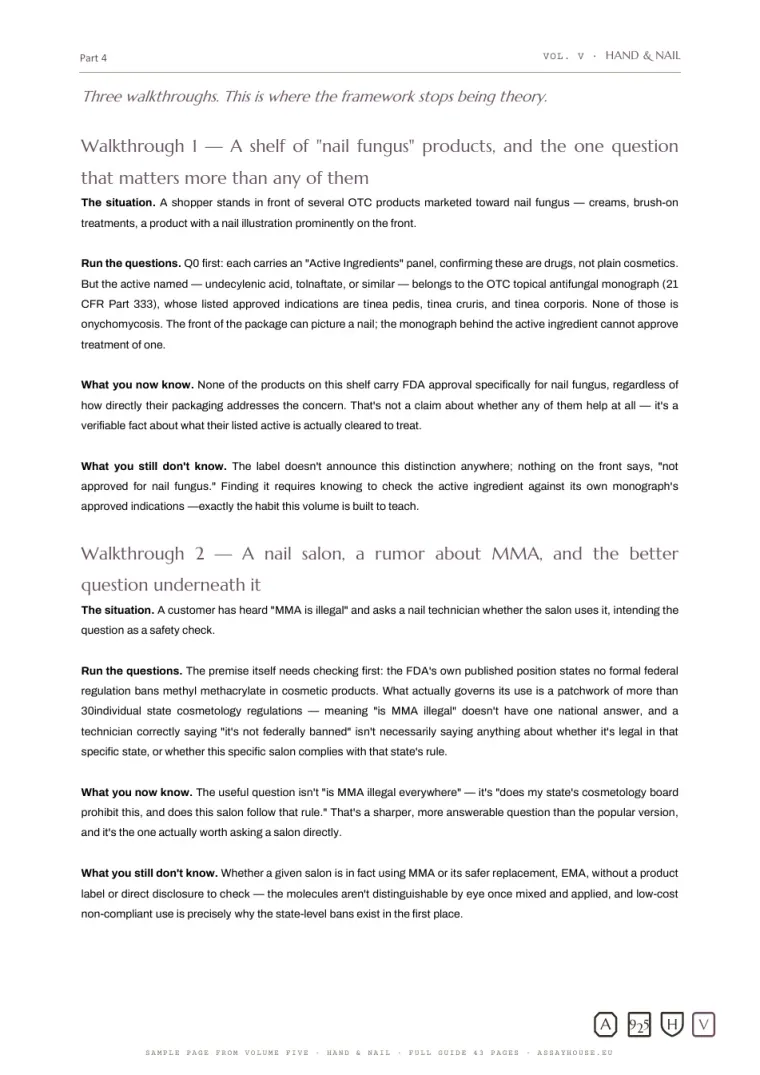
Undecylenic Acid demonstrates a Question Zero variant not yet seen in this series: an OTC option that exists, but for a narrower approved condition than its marketing implies. Ethyl Methacrylate and Formaldehyde each correct a specific, widely circulated misconception about their own regulatory status. Nitrocellulose and Acetone connect directly to each other — the same lacquer chemistry explains both how nail polish forms and how it comes off.
Materials in This Volume
Product types covered
The six questions and the material profiles in this volume apply to:
- Hand creams
- Hand balms
- Nail polish
- Nail polish removers
- Artificial nails
- Cuticle oils
Look inside
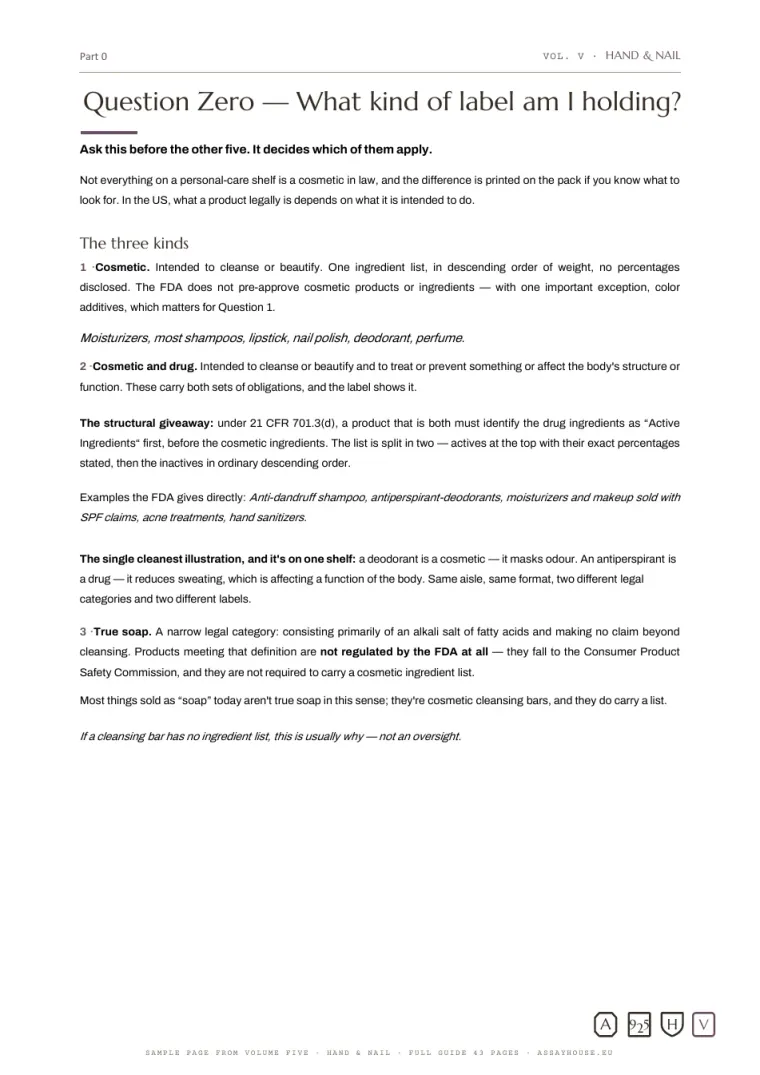
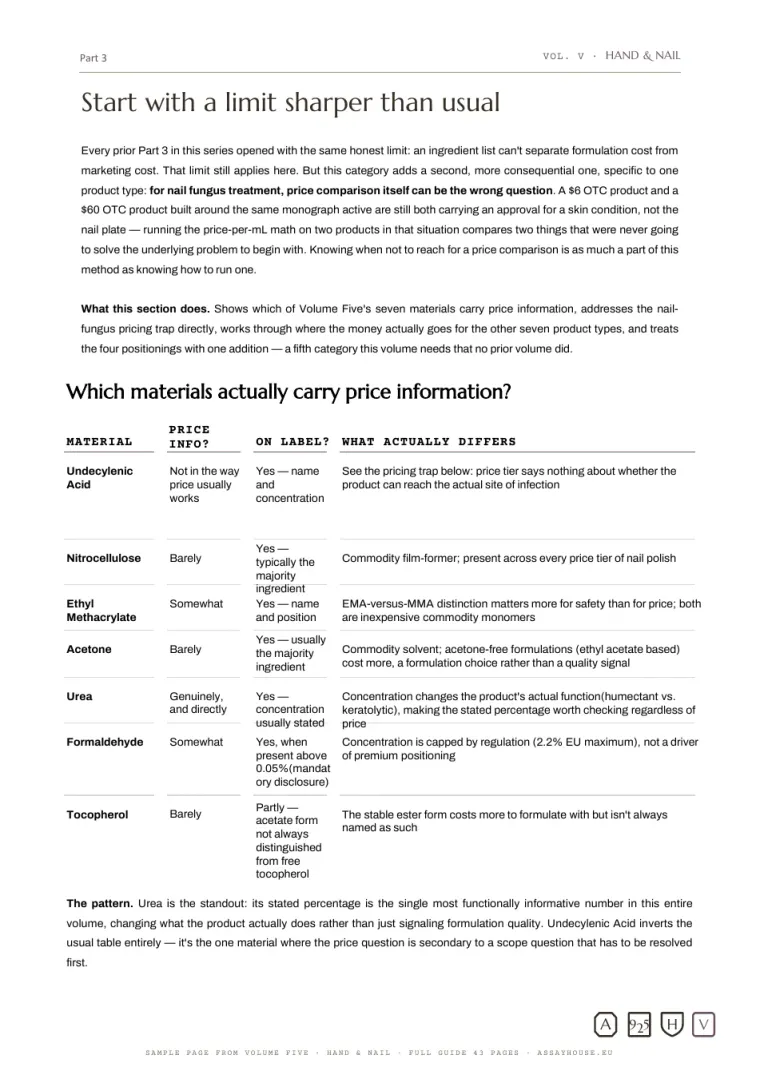
Five real pages from the PDF, chosen to show the method, a full material profile and the price section. The full guide has 43 pages.
At checkout you choose when we send your download: now, which means you lose your right of withdrawal, or after 14 days, which means you keep it (Terms).
